
Why Flexibility is the Secret to Energy Future
The cheapest way to stabilise Europe's grid isn't another power plant, but rather convincing millions of households and factories to use electricity at slightly different times. The technology already exists. The rules don't.
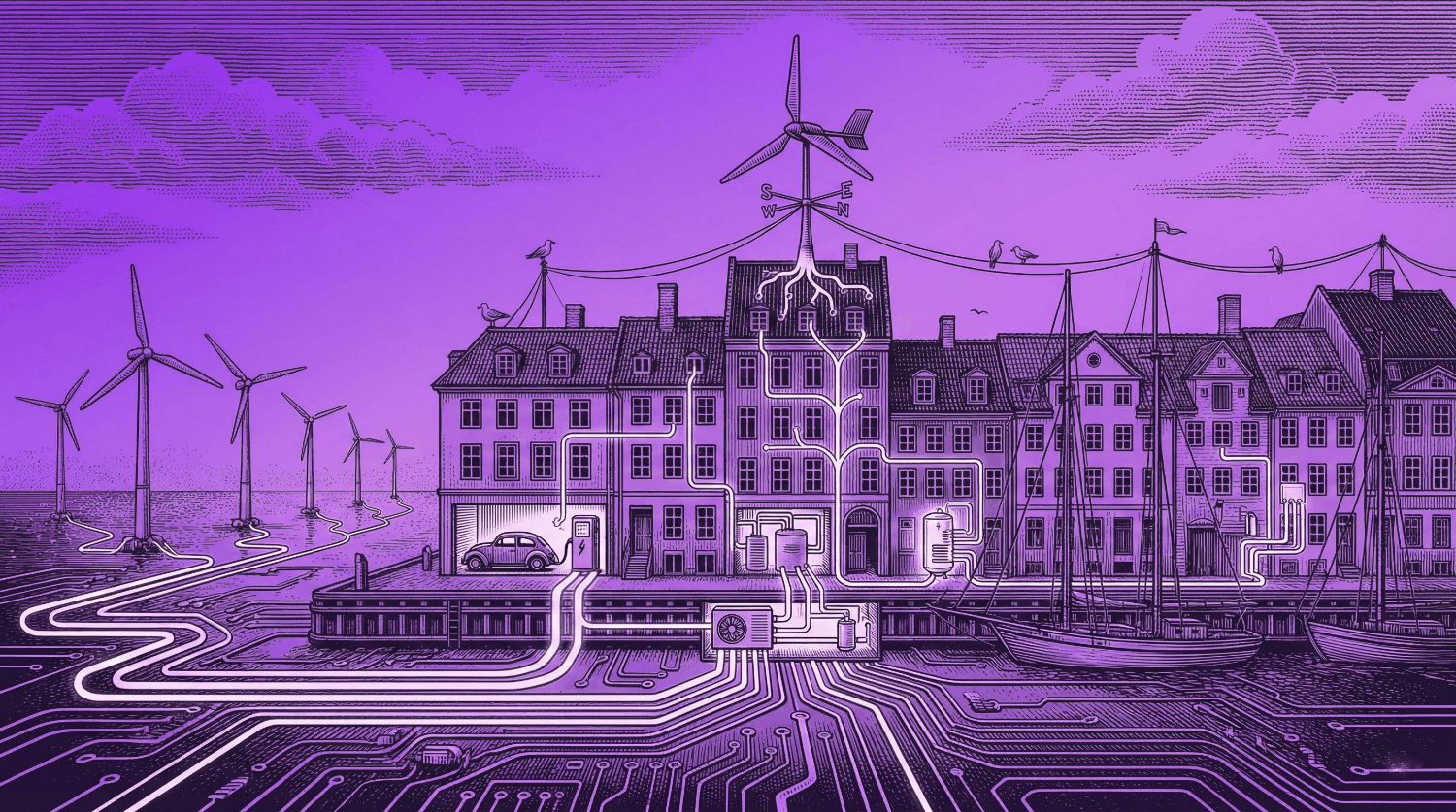
Europe does not have an energy supply problem. It has a timing problem. The continent now generates more renewable electricity than at any point in its history, yet grid costs keep climbing, clean power keeps getting wasted, and factories keep paying rates that push them toward cheaper jurisdictions. The reason is deceptively simple: the system was designed for power plants that run on command, not for wind and sun that show up on their own schedule.
The High Cost of a Rigid Grid
Europe has spent the better part of two decades focused almost exclusively on generation: building more wind and solar. That strategy has hit a wall. As the 2024–2029 legislative cycle is begun, the "bill" for the transition is being threatened by rising infrastructure costs and volatile prices, even as climate neutrality remains the non-negotiable north star.
The key to breaking through isn't how much power we produce. It's how intelligently we manage demand. This is where the Flexible Demand Management Industry (FDMI) comes in. A wide range of technology and service providers are working together to encourage flexible consumption, from households to heavy industry.
As the European Commission rolls out the Affordable Energy Action Plan and the Clean Industrial Deal, flexibility belongs at the core of both strategies, not on the margins.
Your Flexibility Lowers Prices for Everyone (Even Your Neighbours)
A common myth holds that demand-side flexibility only benefits those with "smart" homes. The reality is more counter-intuitive: when you shift your energy use, you lower wholesale prices for everyone on the grid, including the neighbour who doesn't own a smartphone.
The mechanism is the "merit order." Renewables enter the market first at the lowest cost. Fossil fuel plants are called in last, only when demand peaks, and they set the price for the entire market. By shifting demand to times of high renewable generation, flexible consumers push the most expensive fossil fuel plants off the supply curve. The marginal price drops, and every consumer on the grid benefits.
In France, demand response participation in wholesale markets has reduced peak electricity prices by an average of 61€/MWh. That reduction flows through to every EU citizen, whether or not they personally participate.
The €300 Billion in "Invisible" Infrastructure
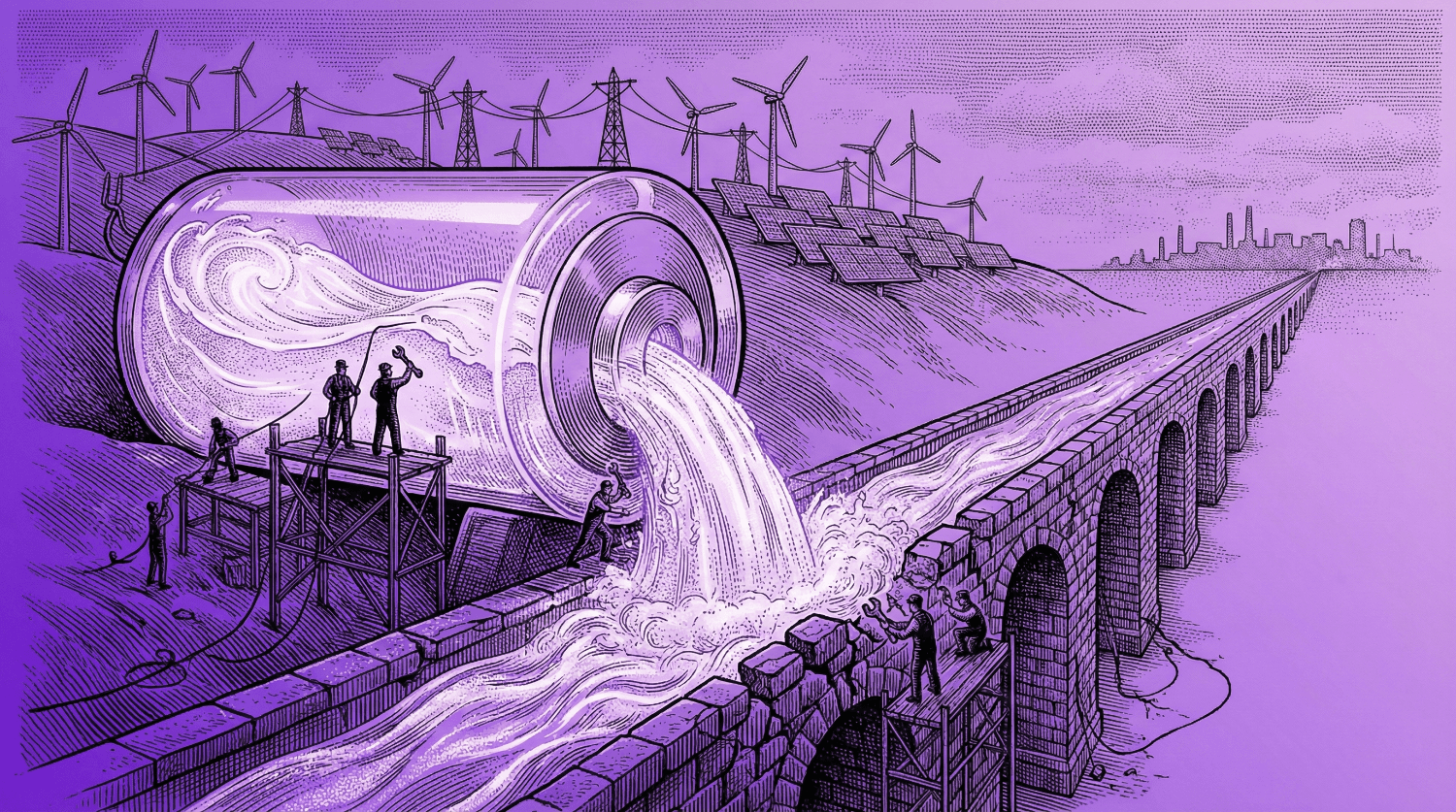
Tapping into demand-side flexibility is like building infrastructure without pouring concrete. Instead of spending billions on physical wires and poles to handle rare demand spikes, we use software and strategy to smooth those spikes out.
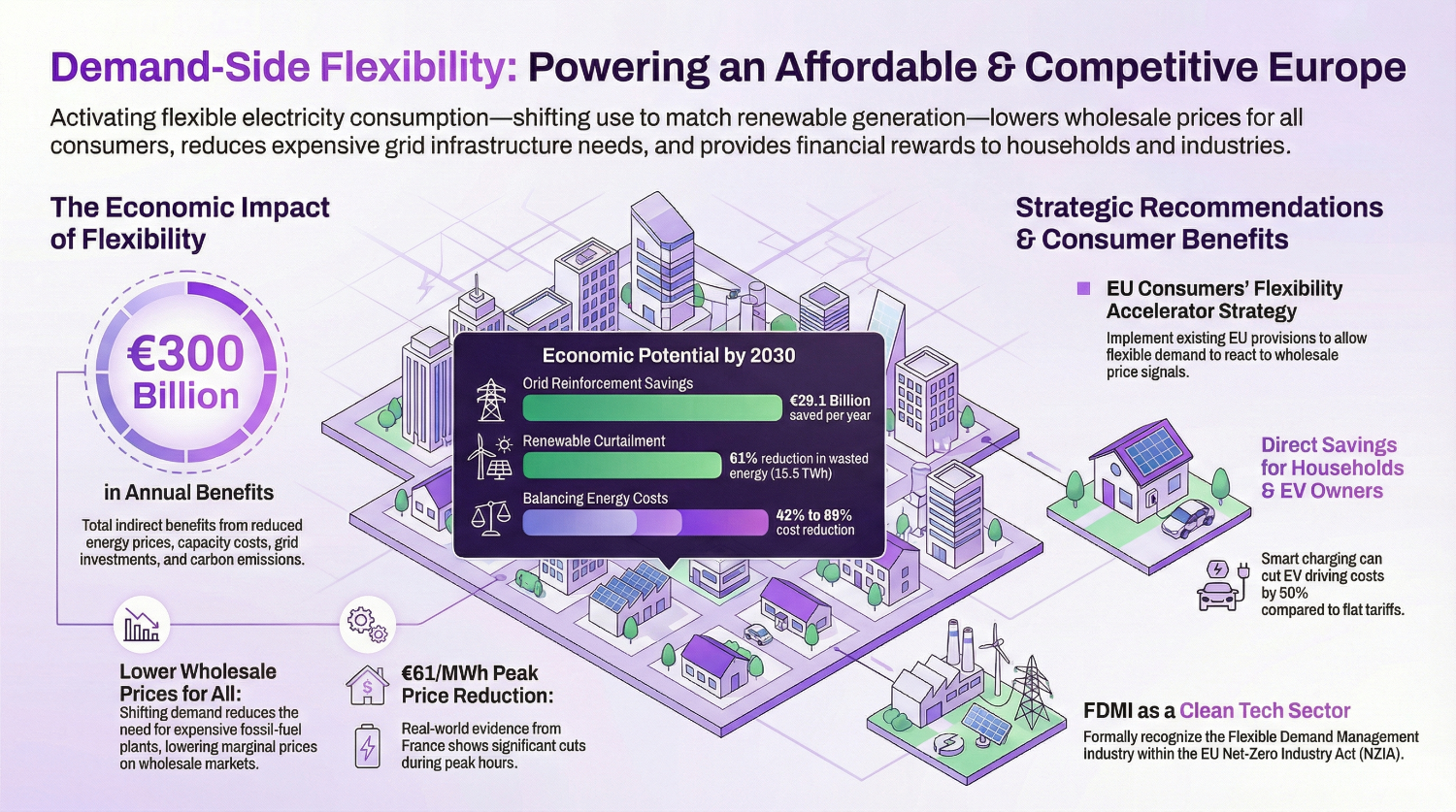
The system-wide savings for Europe by 2030:
- €29.1 billion/year saved by deferring or avoiding physical grid reinforcements, primarily at the distribution level.
- 61% reduction in renewable curtailment costs, saving 15.5 TWh of clean energy that would otherwise be wasted.
- €9 billion saved on "lost load" by ensuring the power system can serve all demand year-round.
An industry assessment puts total indirect annual benefits at over €300 billion, from reductions in energy prices, generation capacity costs, grid infrastructure investment, system balancing costs, and carbon emissions combined.
Turning Your Home into a Revenue Stream
Smart electrification is inverting the traditional relationship between utilities and consumers. Households that automate energy-heavy assets can cut costs dramatically or turn a profit:
- Heat Pumps: In the UK, households on flexible retail tariffs with automation are already saving roughly €450 per year compared to those on flat tariffs.
- Electric Vehicles (EVs): Smart charging tariffs can cut driving costs in half. With bidirectional charging (V2G), a car can earn enough revenue to make driving virtually "free of charge."
Owning the hardware alone doesn't unlock this value. It requires sophisticated management systems that react to the grid in real-time.
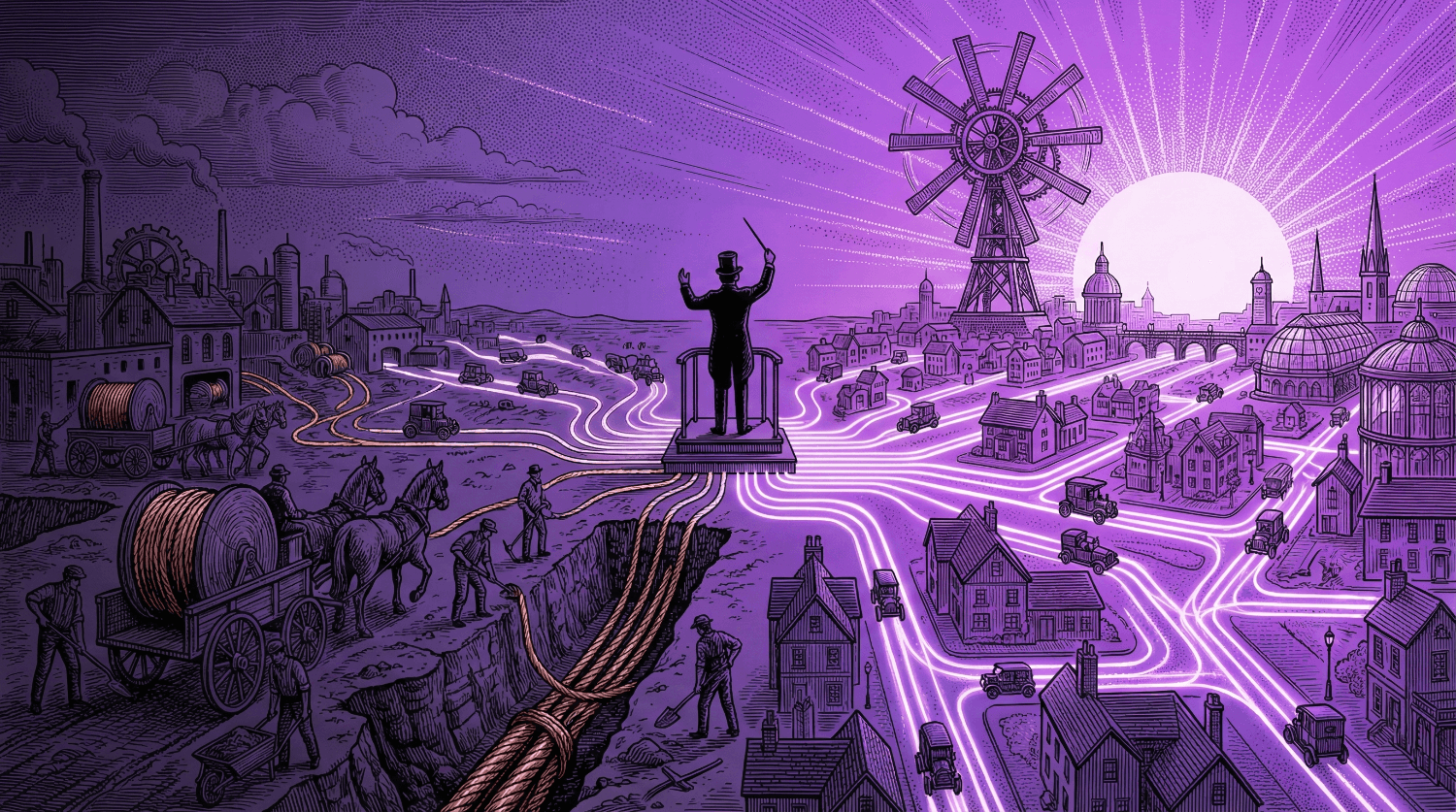
"The transition to a decentralised grid requires an intelligent orchestrator. By using DERMS platforms, we turn passive assets like EVs and heat pumps into active grid participants, unlocking value that was previously hidden from the average consumer." Peter Hofierka, CTO of Wattiva.
A Competitive Edge for Heavy Industry
For Energy Intensive Industries (EIIs), energy costs are a survival factor. As the Clean Industrial Deal takes shape, demand-side flexibility is becoming the sharpest tool for protecting European jobs.
An industrial electric furnace that operates flexibly earns "flexibility revenues" that lower the net cost of heat production, making electrification the more profitable choice over gas. To maximise this, the industry is pushing for 24/7 Guarantees of Origin and the promotion of on-site generation, allowing companies to match cheap clean electricity with their processes in real-time.
The potential is greatest for industries with heating and cooling processes below 200°C. Flexibility audits for these sectors could reveal massive volumes of shiftable load that can be traded for market remuneration, turning an operational cost into a revenue line.
The Regulatory Patchwork
Despite the obvious benefits, Europe remains a fragmented landscape of missed opportunities. Most EU member states are preventing demand-side resources from participating in the day-ahead and intraday markets. There are currently 70 existing EU provisions on flexible demand that Member States have not yet implemented. This regulatory debt is holding back the entire clean tech sector.
The FDMI is calling for a formal "EU Consumers' Flexibility Accelerator Strategy" to harmonise rules, mandate annual national reporting, and enforce implementation of existing legislation.
The Bill We're Choosing to Pay
Flexibility is just as important for Europe's energy future as solar panels and wind turbines. Without it, the grid will remain a rigid and costly legacy of the fossil fuel era.
In a system with many different sources of renewable energy, the ability of consumers to change their demand is the most valuable thing for the grid. The €300 billion is sitting on the table. The big question is whether policymakers will adopt it, or whether they'll keep paying the premium for rigidity.