The Invisible Power Plant
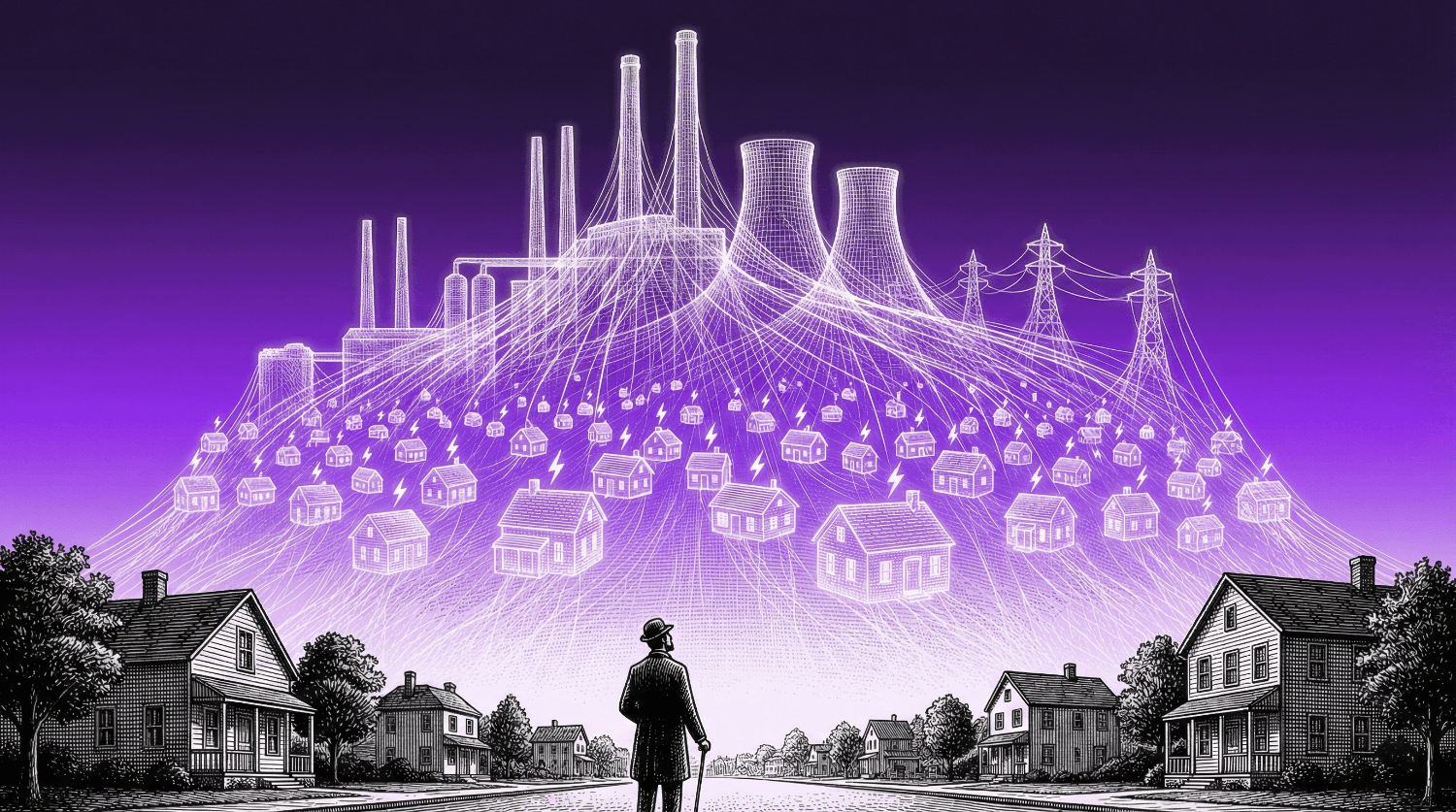
Virtual power plants are combining millions of home batteries, electric vehicles (EVs) and smart thermostats to create a distributed grid with capacity to rival that of nuclear power stations. Utilities that fail to adapt are being left behind.
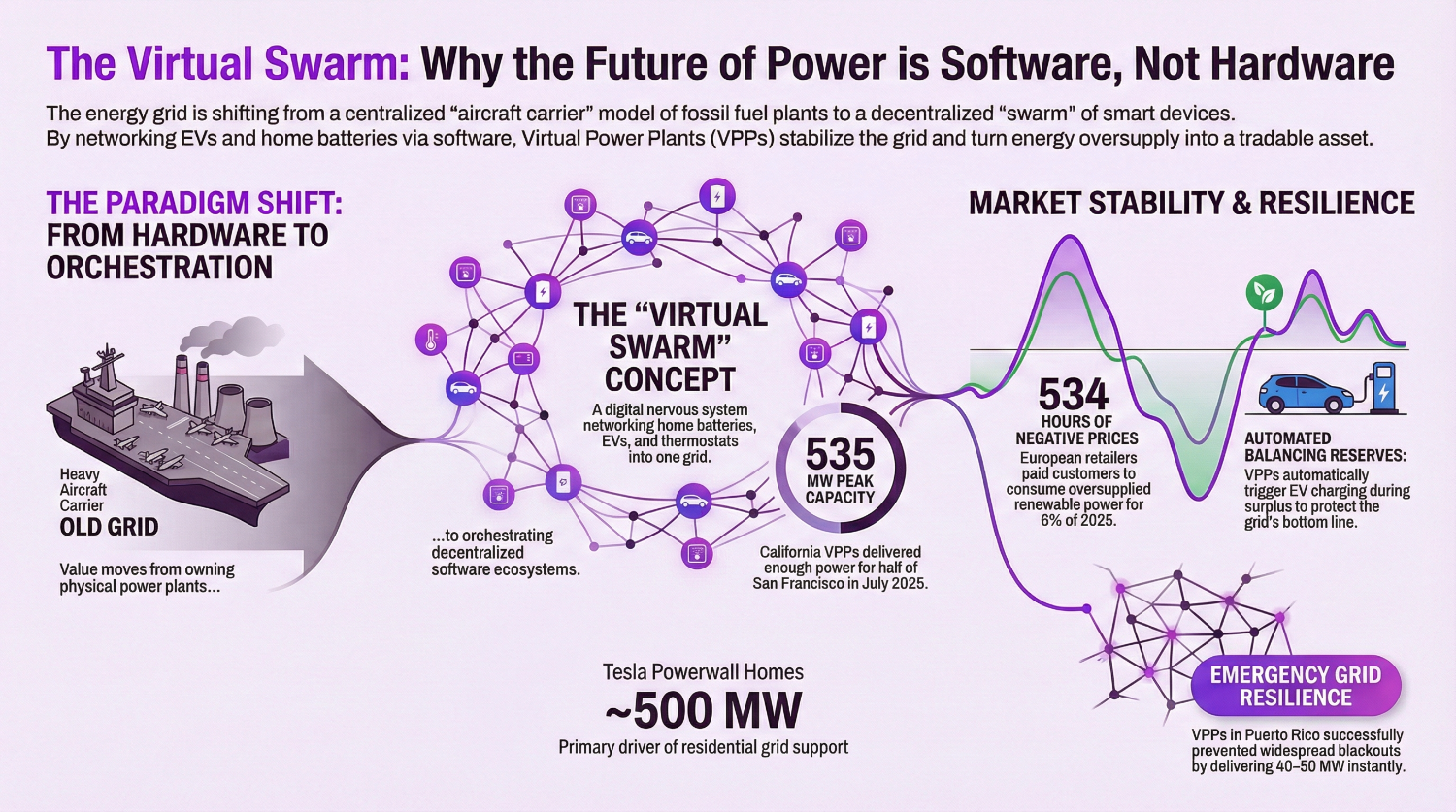
In 2025, wholesale electricity prices across Europe fell below zero for 6% of the year. That's 534 hours in total. In effect, retailers were paying customers to consume power. This would have been unthinkable a decade ago. Today, however, it describes an emerging structural feature of energy markets saturated with renewables. This has created a new winner: the virtual power plant. This software platform turns the chaos of oversupply into a tradable asset.
Your Neighbourhood is Already Outperforming Nuclear Plants
The 20th-century power grid was modelled on the heavy aircraft carrier: a centralised, rigid fleet of fossil fuel plants. These massive generators were designed for a world of predictable, one-way power flow, but they are notoriously slow to "brake" or change course. To maintain grid stability, operators have historically relied on "peaker plants". These are expensive, high-emission turbines. They sit idle for all but the most stressed hours of the year.
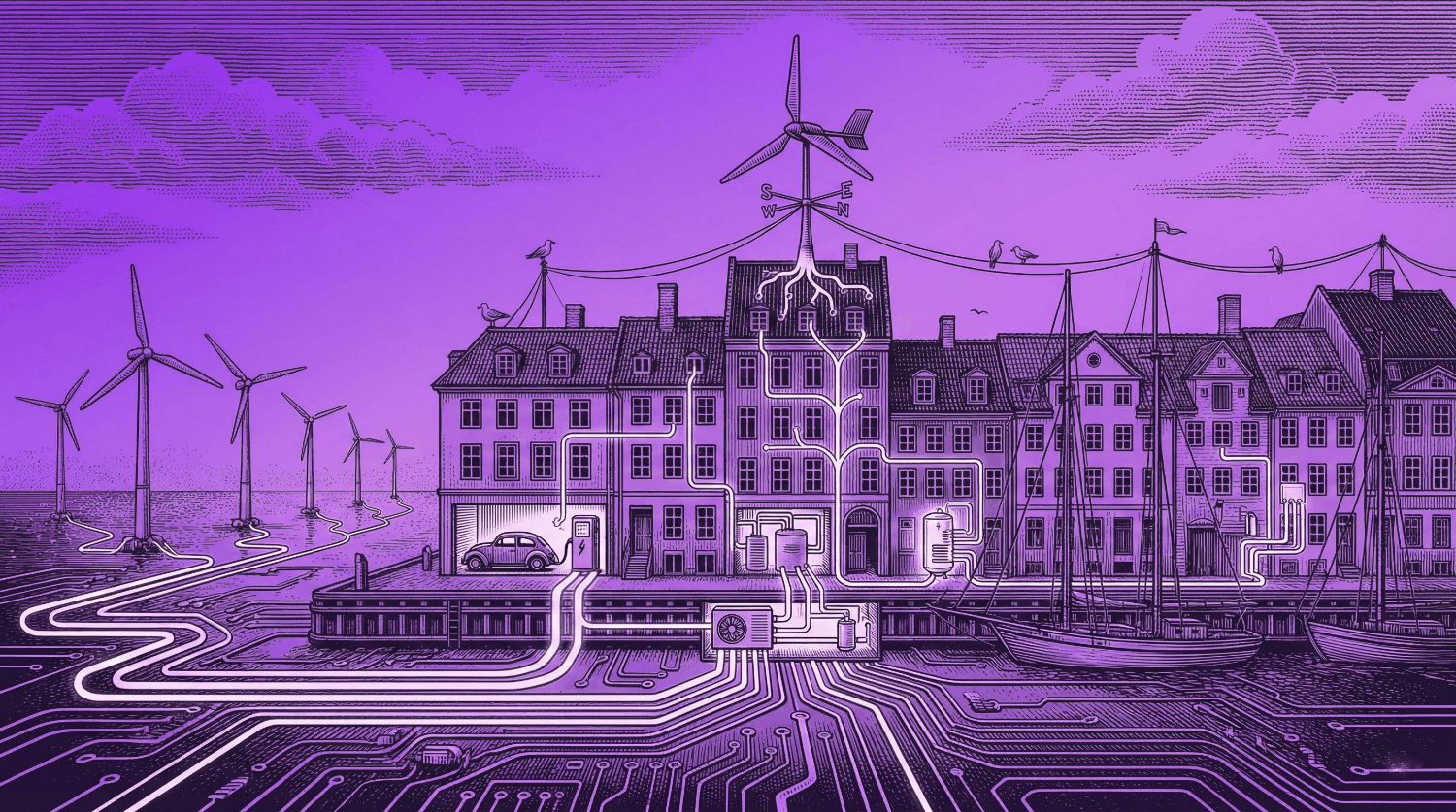
Today, the "aircraft carrier" model is being dismantled by a "swarm" of intelligence known as the Virtual Power Plant (VPP). By networking Decentralised Energy Resources (DERs) like home batteries, smart thermostats, and EVs, VPPs create a digital nervous system that responds to grid fluctuations in milliseconds.
This bottom-up reconstruction allows for the seamless integration of Renewable Energy by treating every household as a micro-generator. The grid is no longer a static piece of hardware; it is a dynamic software ecosystem that is already outperforming the centralised giants of the past.
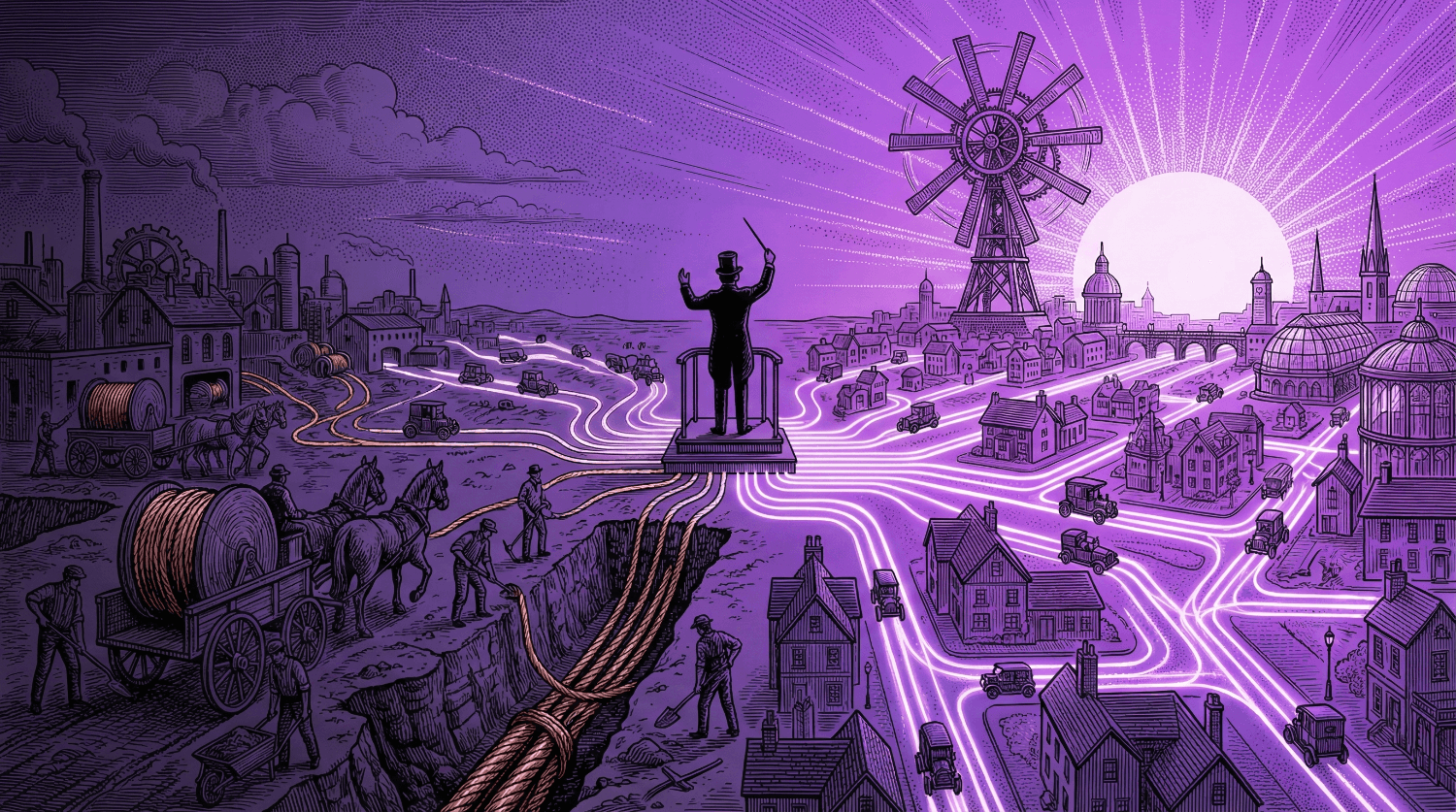
We are witnessing a fundamental paradigm shift where the utility's value is moving from "owning hardware" to "orchestrating software." In this new "asset-light" model, a VPP functions like Uber or Airbnb: it provides a vital service without owning the underlying generation assets. This allows for a democratic shift in power. Individual prosumers take centre stage. These are people who both produce and consume energy.
The scale of this shift is staggering. In July 2025, California VPPs delivered more than 535 MW of capacity to the grid during peak demand. Within that total, aggregated Tesla Powerwall households alone provided nearly 500 MW. For perspective, that is enough capacity to power half of the city of San Francisco, delivered entirely by residential assets.
When Electricity Costs Less Than Nothing
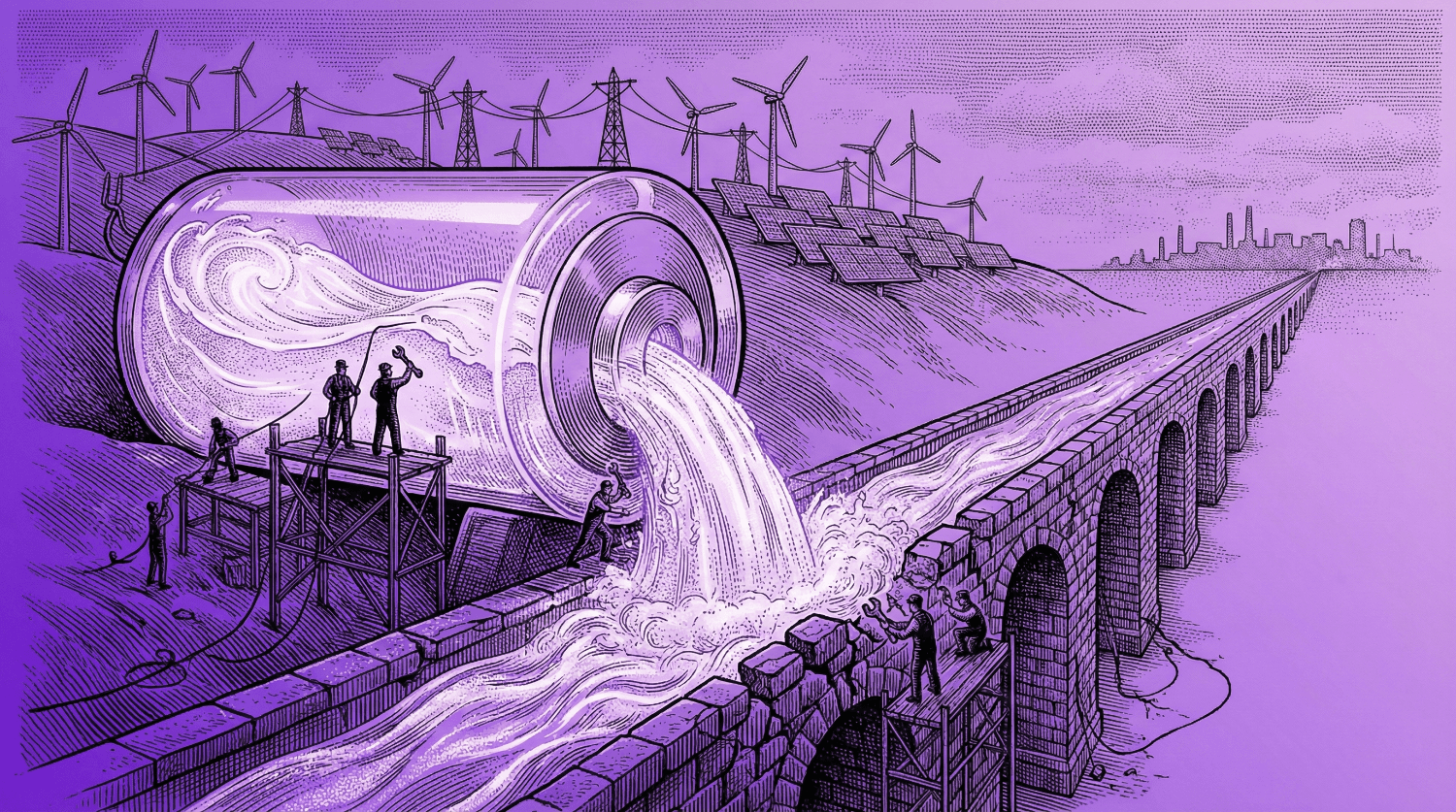
In modern energy markets, an excess of wind or solar power can cause wholesale electricity prices to fall below zero. During these periods, the grid is so oversupplied that retailers must pay to offload power in order to prevent system instability. Back in 2025, European wholesale markets hit a record 534 hours of negative prices, which works out to around 6% of the whole year.
VPPs transform this liability into a strategic margin-protection tool. When prices tank, the VPP triggers a "Negative Balancing Reserve", automatically directing thousands of connected EVs (each representing an 11 kW load) to charge. By absorbing the surplus, the VPP safeguards the retailer's profits.
This "Flexibility Gap" between the cheapest and most expensive hours is the most valuable real estate in the energy transition. As Martin Gonda, CEO of Wattiva, notes:
"The asset isn't just the hardware; it's the flexibility. If you own the connection to the EV, you own the future of the wholesale market."
No Hardware Required
Historically, connecting new assets to the grid took 18 months. It required physical site visits, complex Supervisory Control and Data Acquisition (SCADA) integration and arduous Geographic Information System (GIS) reconciliation. This 'pilot purgatory' acted as a major bottleneck for innovation.
Modern VPPs have bypassed this hurdle by operating as a "parallel layer" alongside existing utility stacks. By using cloud-to-cloud integrations and REST APIs, operators can connect directly to a vehicle's OEM cloud without installing a single piece of hardware.
This "hardware-free" approach allows a VPP to go live in a couple of weeks rather than quarters. Because it requires zero CAPEX, the grid's "nervous system" can now expand at the speed of software deployment, making the transition to a decentralised grid faster and cheaper for every stakeholder involved.
Your EV Is Your Utility's Best Retention Strategy
Energy retail is a high-churn business, with annual customer turnover reaching 12–15% on average and peaking at 25% in highly competitive markets like Spain and the Netherlands. When electricity is treated as a simple commodity, customers switch providers for the slightest price advantage.
VPPs disrupt this cycle by turning a commodity service into a value-added financial product. A customer with a managed EV or battery earns daily rewards and automated savings that are visible in their utility app.
This creates a high level of "stickiness." Switching providers would mean losing the automated optimisation and the long-term financial benefits of the VPP ecosystem. For the utility, the EV is no longer just a load on the wire; it is a customer retention tool that creates significant friction against churn.
National Grid Resilience
The technical pinnacle of the VPP is its role in providing "Ancillary Services," which keep the grid's frequency stable. This is managed through two primary mechanisms:
Positive Balancing Reserve: Discharging residential batteries to the grid to cover an energy shortfall.
Negative Balancing Reserve: Directing industrial plants to increase production or EV fleets to increase charging to absorb a sudden surge in power.
Using advanced protocols like Frequency Containment Reserve (FCR) and automatic Frequency Restoration Reserve (aFRR), VPPs react to frequency deviations in real time. This isn't just a theoretical exercise for engineers.
In Puerto Rico, a VPP delivered 40–50 MW during grid emergencies and peak demand periods. This intervention successfully prevented widespread load shedding and maintained reliable service for the entire community. Participants are no longer passive consumers; they are active, compensated participants in national grid resilience.
The End of Building and the Beginning of Orchestrating
The transition from centralised infrastructure to a dynamic, distributed network is the new standard for the global energy sector. As we move toward a future of Vehicle-to-Grid (V2G) and smart-metered homes, the distinction between "utility" and "customer" will continue to blur.
We are entering an era where we don't always need to build more power plants. We simply need to better coordinate the ones we already have in our garages.