How a Middle East War Finally Flipped EV Sales
A conflict in the Persian Gulf sent petrol to $2.54 a litre in Sydney. Within days, EV searches jumped 76.7%, dealership lots emptied, and Australia's years-long hesitation collapsed. The question now is whether the grid can survive the rush.
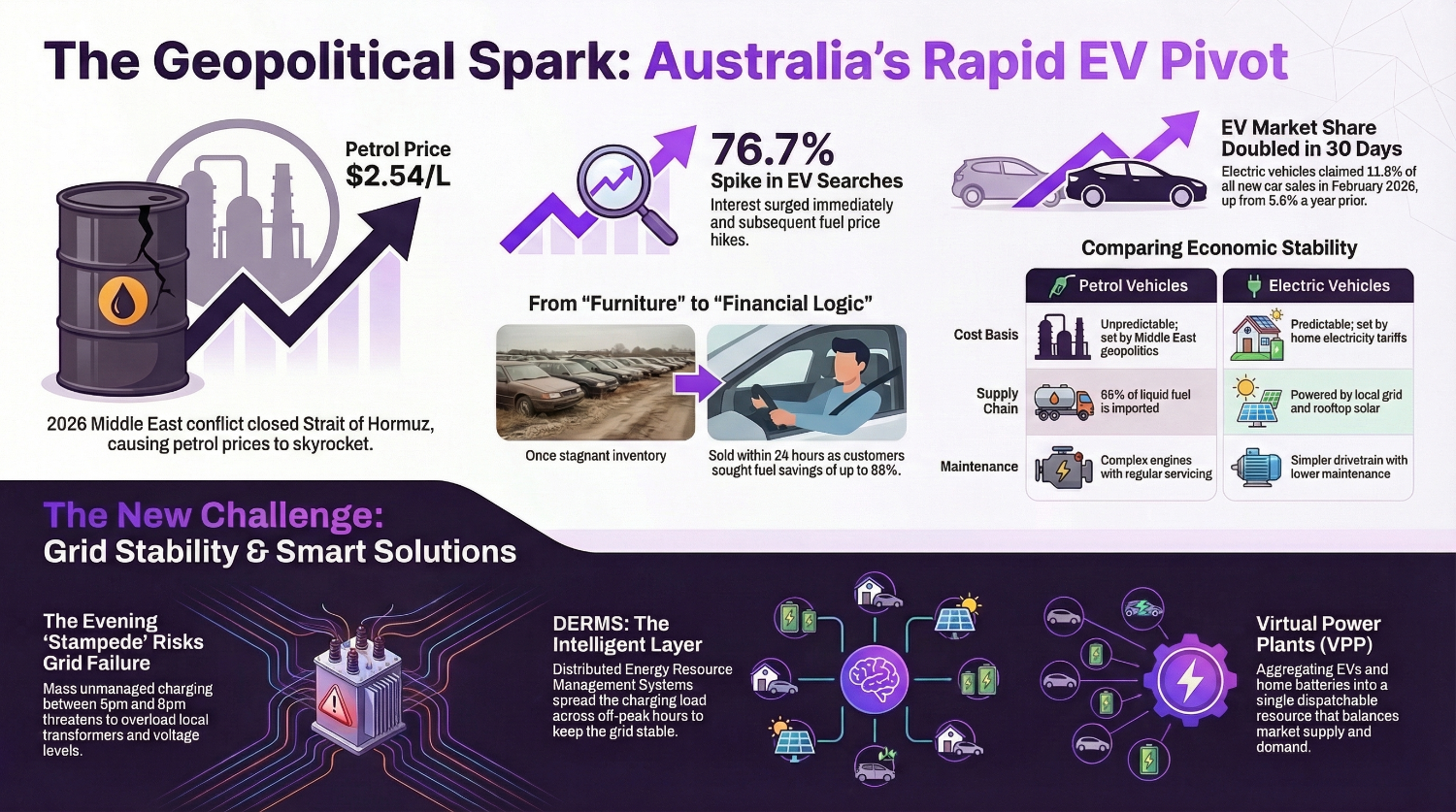
On 28 February 2026, conflict between the United States, Israel, and Iran closed the Strait of Hormuz to commercial shipping. Within 72 hours, Australian petrol stations began repricing their forecourt displays. Within a week, the country's biggest car listings platform recorded a 76.7% spike in EV searches. Within a month, electric vehicles had claimed nearly 12% of all new car sales — double their share a year earlier. Australia did not plan to go electric this fast. A war planned it for them.
For years, buying an electric vehicle in Australia was something most people kept putting off. The cars were getting better. The prices were coming down. The charging network was growing. But the purchase decision kept getting deferred, parked in the same mental folder as the gym membership: a good idea, for later. The thing that changed was not a better subsidy scheme. It was a war.
On 28 February 2026, conflict between the United States, Israel, and Iran severely disrupted shipping through the Strait of Hormuz, the narrow waterway in the Persian Gulf through which around one-fifth of the world's oil passes in normal times. Ships stopped crossing. Insurance costs went through the roof. Within days, Australians felt it at the petrol station.
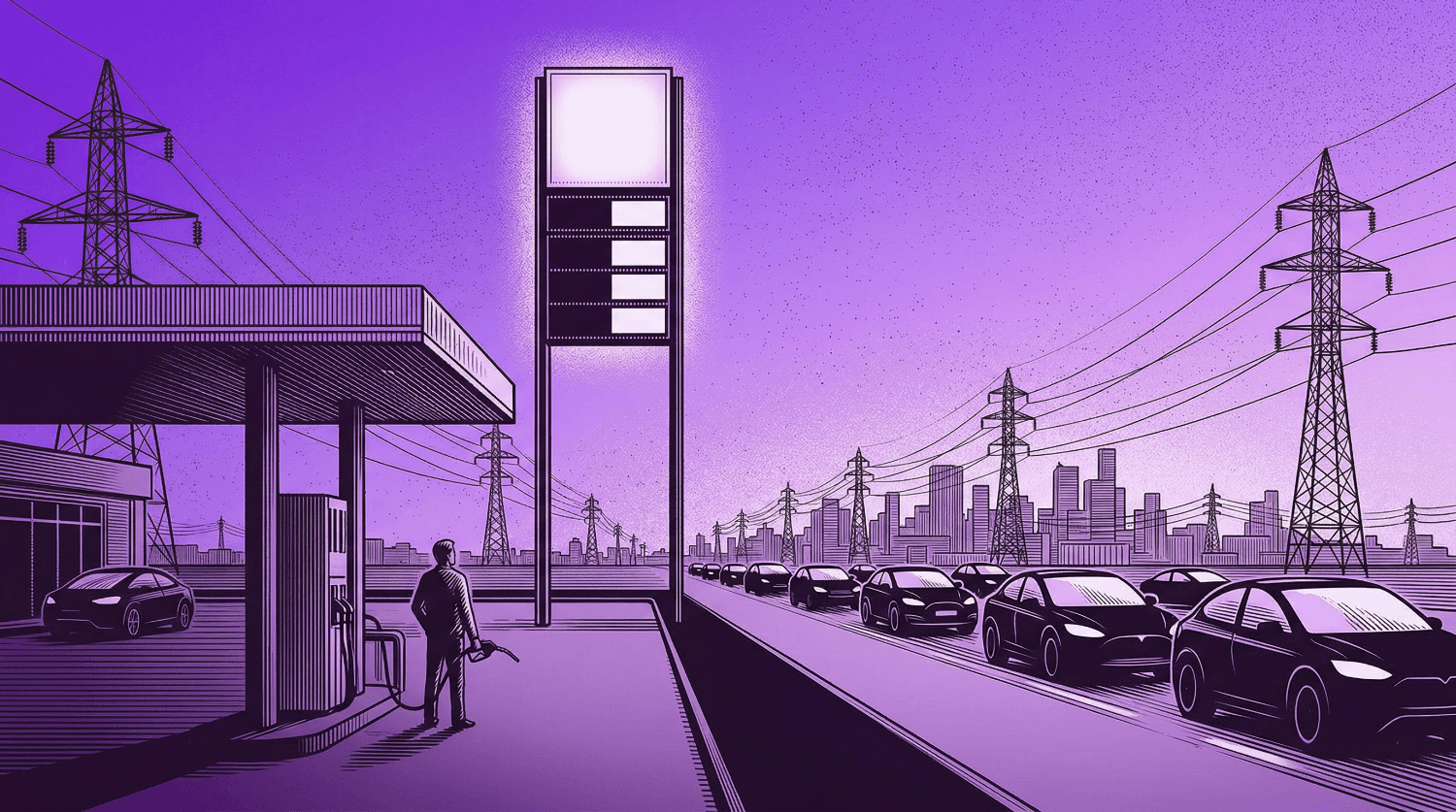
Between late February and mid-March 2026, average petrol prices across Australia's five biggest cities jumped by nearly 50 cents per litre. Premium fuel hit $2.54 per litre in Sydney. Diesel climbed to $2.70. In regional areas, it went higher.
Why Australia Got Hit So Hard
Australia is a major energy exporter. It ships enormous quantities of coal and liquefied natural gas to Asia every year. And yet it imports roughly 90% of its liquid fuel as finished petrol and diesel, mostly from refineries in South Korea, Singapore, Malaysia, and Taiwan. Those refineries depend on crude oil from the Middle East.
Six of Australia's eight domestic oil refineries have closed since 2003. The country kept exporting energy while quietly losing the ability to fuel its own cars.
So when the Strait of Hormuz becomes dangerous, the chain reaction reaches Australian forecourts fast. The government tapped its emergency petroleum reserves and confirmed it held around 36 days of petrol supply in-country. The International Energy Agency recommends a minimum buffer of 90 days. There was no immediate shortage. But there was no ceiling in sight either.
The Numbers That Tell the Story
The effect on EV interest in the weeks after the conflict began:
- EV searches on Carsales, Australia's biggest car listings platform, jumped 76.7% overnight
- 25% of Australians said they were now considering buying an EV, up from 7% before the war
- Among Australians aged 25 to 34, that figure hit 42%
- More than 70% of existing EV owners are saving upwards of 60% on fuel compared to their old petrol cars
The February 2026 sales data tells the same story. Electric vehicles claimed 11.8% of all new car sales that month, up from 5.9% in February 2025. Full-year 2025 EV sales had already crossed 100,000 units in Australia for the first time. This was not a trend that came from nowhere. The war lit the fuse on something already burning.
From Showroom Furniture to Gone in 24 Hours
Luke Lalor runs the dealership in Moorabbin, a suburb of Melbourne. Before the conflict, a BYD electric car had been sitting on his lot for more than a month. Customers would walk past it, maybe ask a question, then leave with something petrol-powered. Lalor called it "furniture."
Within 24 hours of petrol prices spiking, it sold. He is now fielding hundreds of enquiries every day from drivers who are not browsing. They want out of their petrol cars.
MG Motor Australia saw EV enquiries jump 220% month-on-month, with its most popular electric models up nearly 300%. Customers are reporting weekly fuel savings of up to 88% compared to running a petrol car. Those savings climb further when an EV is paired with rooftop solar and a home battery, which together can disconnect a household from global energy price swings almost entirely.
This Is Not Just a Budget Car Story
Fuel price shocks typically drive people toward cheaper alternatives. That is happening. But the premium end of the market is moving too.
Polestar, the Swedish electric car brand, recorded a 38.5% sales increase in Australia across 2025. Its most popular model, the Polestar 4, starts at around $78,500. These are not buyers who cannot afford petrol. These are buyers who have decided that a fuel supply chain tied to Middle Eastern geopolitics is not something they want to depend on.
The comparison used to be petrol versus EV on price and range but now it looks like this:
Petrol Vehicle
- Fuel price set by events in the Persian Gulf
- Unpredictable costs with no upper limit
- Vulnerable to supply shortages and rationing
- Complex combustion engine requiring regular servicing
Electric Vehicle
- Running cost largely determined by your home electricity tariff
- Predictable costs, lower with smart charging
- No dependence on imported refined fuel
- Simpler drivetrain, significantly lower maintenance costs
When the comparison looks like that, the decision stops being about environmentalism or early adoption. It becomes basic financial logic.
The Problem Nobody Is Talking About
When thousands of people switch to electric cars at the same time, they need to charge those cars somewhere. Most will do it at home. Most will plug in when they arrive home from work, between 5pm and 8pm. Most will do this on streets where the electrical grid was designed for a world where nobody charged a car at home.
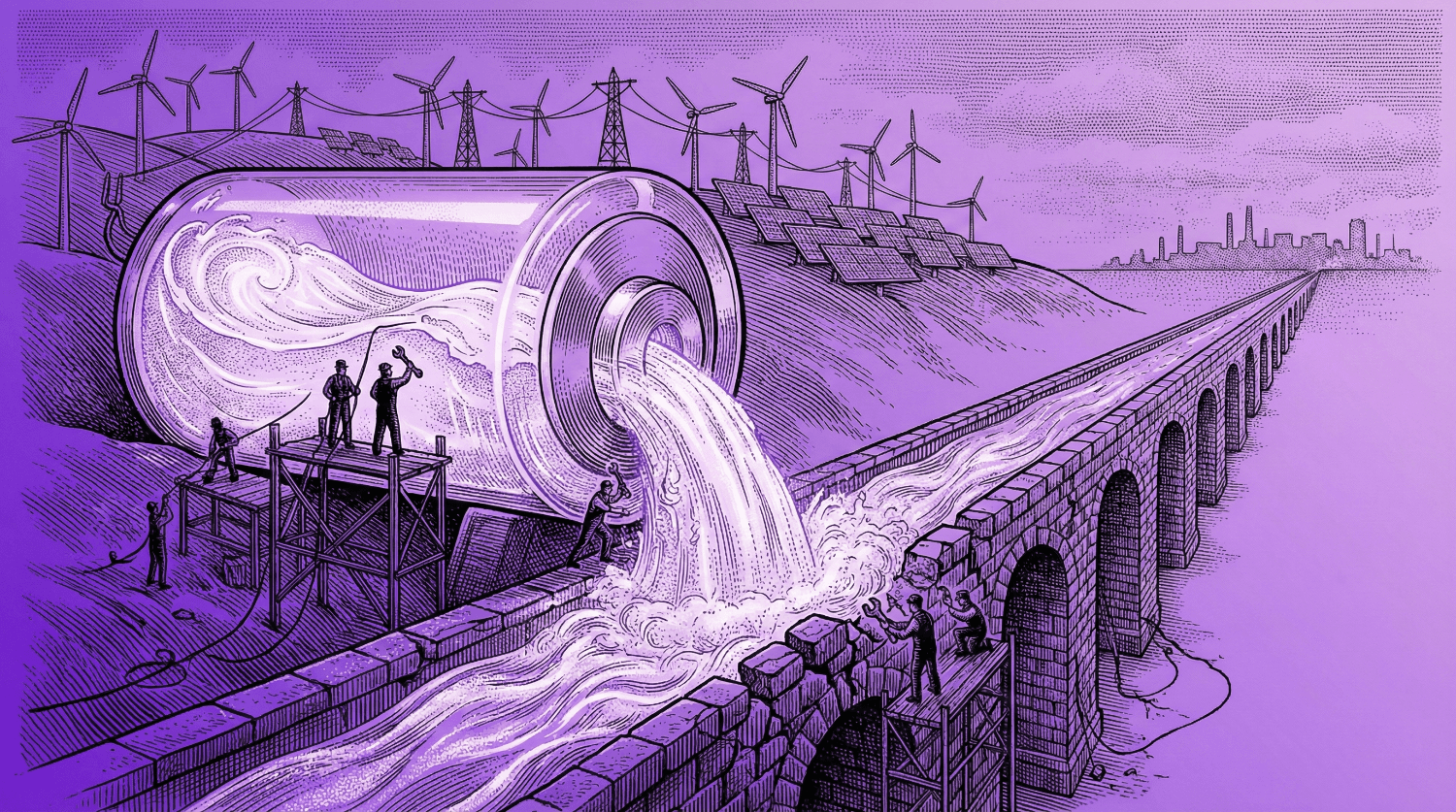
The result is predictable. Transformers get overloaded. Voltage drops. The evening electricity demand peak, which grid operators already work hard to manage, gets dramatically worse. You end up with a different kind of energy crisis: not a shortage of petrol, but a grid that cannot cope with the surge.
This is where smart charging and DERMS come in. DERMS stands for Distributed Energy Resource Management System. Think of it as the intelligent layer that connects your EV, your home, and the wider electricity grid. A DERMS platform knows when electricity is cheap, when the grid is under stress, and when your car actually needs to be fully charged. Instead of everyone drawing maximum power at 6pm, it spreads the load across the night, charges when prices are lowest, and keeps the grid stable.
"The stampede to electric is no longer a slow crawl. It is a sprint, and our grid intelligence needs to keep pace," says Martin Gonda, CEO of Wattiva, a smart EV charging platform. "Without a robust DERMS platform managing the charging load, we risk trading one energy crisis for another."
What Energy Companies Can Do About It
Wattiva is virtual power plant software for innovative energy companies. The platform aggregates your customers' EVs, home batteries, heat pumps, and solar into a single dispatch-able resource you control.
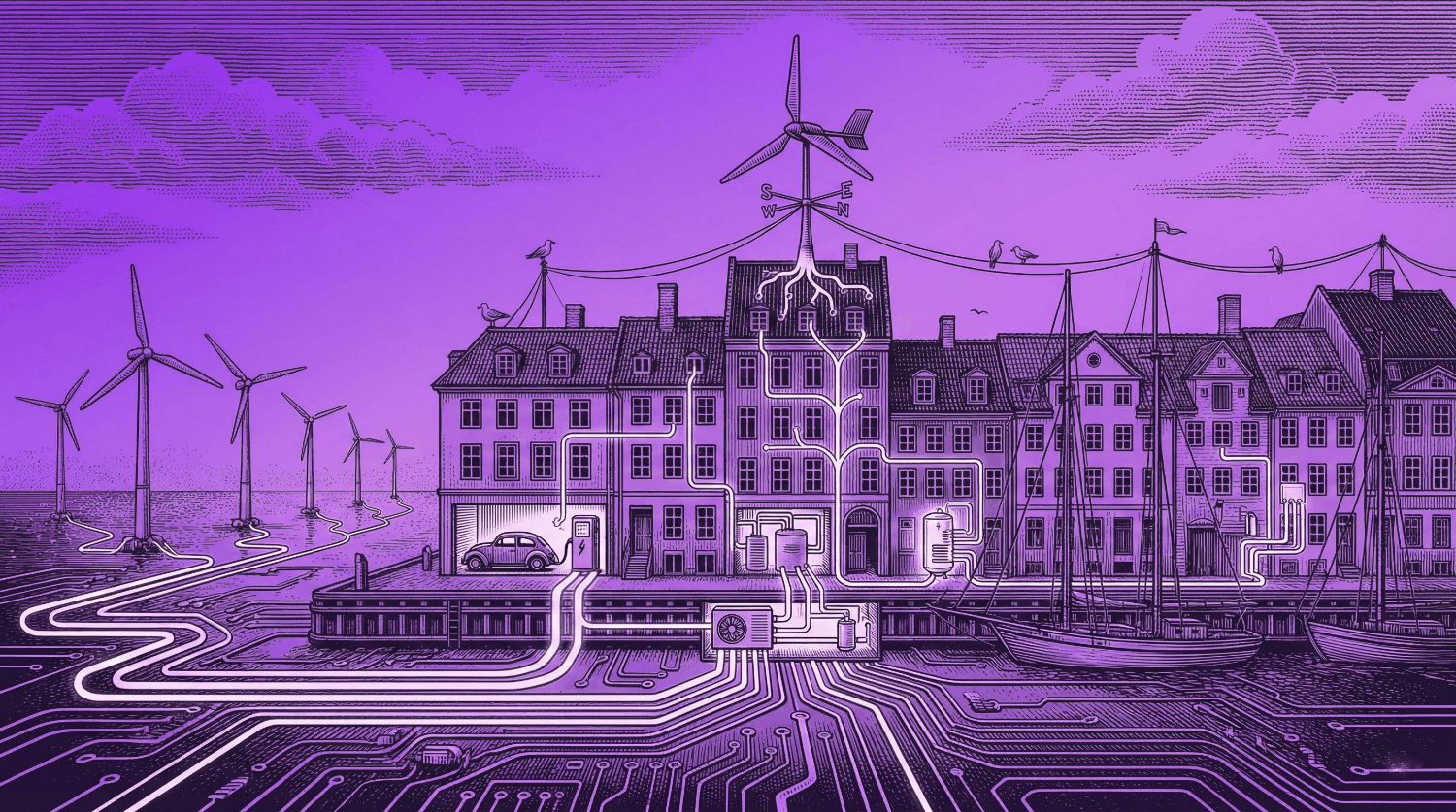
Every EV that plugs in at home is a flexible load. Every home battery is a small storage unit. Every rooftop solar installation is a distributed generator. Managed individually, these assets are unpredictable and hard to control. Aggregated intelligently, they become something entirely different: a virtual power plant that can balance supply and demand, reduce peak load, and participate in energy markets.
Wattiva platform gives energy retailers and grid operators the software to take control of the flexibility their customers already own. Through the Wattiva app, end customers get cheaper charging and rewards for supporting the grid. Behind the scenes, the energy company running the platform gains a coordinated, dispatchable portfolio of distributed energy assets it can put to work.
Wattiva powered energy company is capable of:
Shifting EV charging load away from peak evening hours, reducing the need for expensive grid reinforcement
Aggregating EVs, home batteries, heat pumps, and solar into a single virtual power plant under one platform
Offering customers a branded smart charging experience that reduces churn and adds real value to the energy relationship
Generating revenue from flexibility markets by dispatching aggregated assets when grid conditions demand it
The timing matters. A mass EV adoption event, driven by a fuel crisis, is precisely when energy retailers with a DERMS platform in place can move fast. Those without one will be left managing an uncontrolled surge of home charging demand with no tools to shape it.
"The customers flooding into EVs today are the flexibility portfolio of tomorrow," says Gonda. "The energy companies that give those customers a reason to connect their vehicle to a smart platform now are the ones that will own that flexibility asset for the next decade."
Wattiva is available as a white-label platform. Energy companies deploy it under their own brand, while the underlying infrastructure handles real-time price signals, vehicle integrations across all major EV brands, and the grid balancing logic. The energy company focuses on the customer relationship.
This Is Not Going Back to Normal
When fuel prices stabilise, some people will forget about EVs and keep driving what they have. That has happened after every previous price spike.
But something is different this time. The research found that 35% of Australians now considering an EV intend to follow through with a purchase. The mental shift that comes from watching petrol hit $2.54 per litre is hard to undo. Once you have done the maths, the logic of staying with petrol gets harder to defend.
Australia's two remaining domestic refineries cannot change the import equation. The Strait of Hormuz will stay a pressure point for as long as the region is unstable. The next shock could arrive just as fast as this one did.
Australia did not become an electric vehicle country because of a politician's speech or a car company's marketing campaign. It happened at a petrol station in March 2026, when the price on the display made the decision for millions of people. The question now is whether the grid, and the companies smart enough to manage it, can keep up.