Europe Solved the Wrong Energy Crisis
Europe's real energy problem isn't that it lacks cheap power. It's that cheap power arrives at the wrong time, in the wrong place, and nothing in the system knows how to move demand to meet it.
In 2025, German wholesale electricity prices went negative for 573 hours. That is nearly twenty-four full days. During this time, power was, in economic terms, worthless. At the same time, German households paid roughly twice as much as American households. Both figures are correct. That's the problem.
The Grid Problem Europe Built for Itself
In the first half of 2025, German wholesale electricity prices rose 37 percent year-on-year. French prices jumped roughly 45 percent. The United Kingdom saw a 40 percent increase.
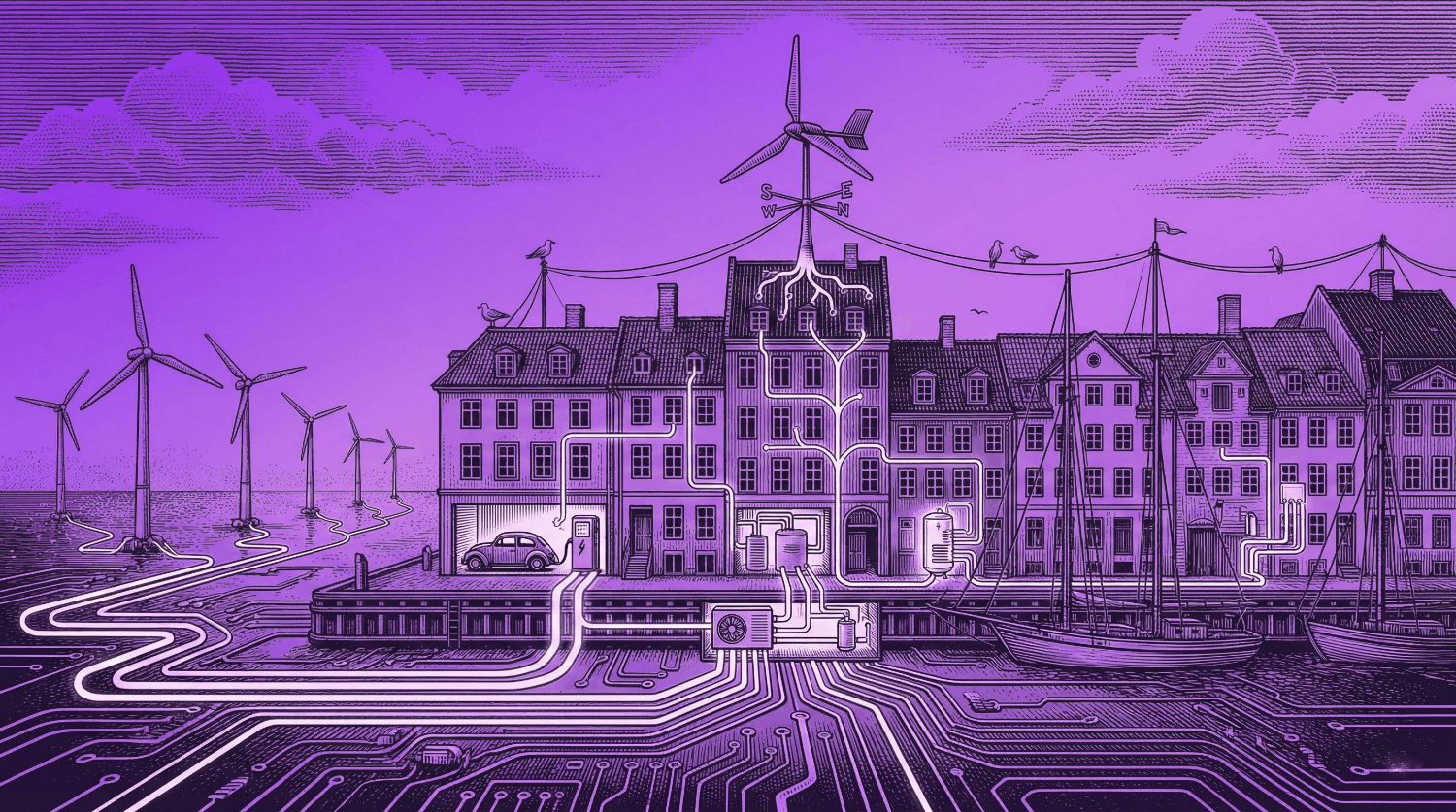
The instinctive explanation, not enough renewables, gets the causality backwards. The problem is that Europe built a 21st-century generation fleet on top of a 20th-century delivery system. The grid was designed to send power in one direction, on demand. Renewables don't work on demand. They work when the wind blows and the sun shines, and they produce nothing when it doesn't. The mismatch between when power is generated and when it is consumed has replaced the gas-supply shock of the early 2020s as the defining structural challenge of European energy.
The energy crisis didn't end. It shape-shifted. And the new form is harder to see, because the headline numbers (falling wholesale averages, record solar capacity) suggest progress. They aren't wrong. They're incomplete.
Why Cheap Power Makes Expensive Bills
Here is a number that should not coexist with the one that follows it. In 2025, German wholesale electricity prices went negative for 573 hours, a 25 percent increase over the previous year, amounting to nearly twenty-four full days when power was, in economic terms, worthless. Across Germany, the Netherlands, and Spain, the share of negative-price hours hit 8 to 9 percent in the first half of the year.
In the same period, European industrial retail electricity prices ran roughly twice the American rate and about 50 percent above China's, according to IEA estimates. Energy-intensive industries (the steel mills, chemical plants, and aluminum smelters that anchor Europe's manufacturing base) face a structural cost disadvantage that no amount of wholesale price averaging can paper over.
The disconnect between cheap wholesale power and expensive retail bills is not a statistical anomaly. It is the central feature of Europe's current energy economy, and it has a specific mechanical explanation: the energy component of the bill is shrinking, but everything else (grid fees, levies, redispatch costs, capacity charges) is growing faster.
Consider Germany's 2025 tariff structure. The offshore wind levy rose to 0.816 cents per kilowatt-hour, up from 0.656 the year before. The grid usage levy more than doubled to 1.558 cents per kilowatt-hour. These are costs incurred not because of expensive fuel, but because the physical grid cannot efficiently move the cheap fuel it already has.
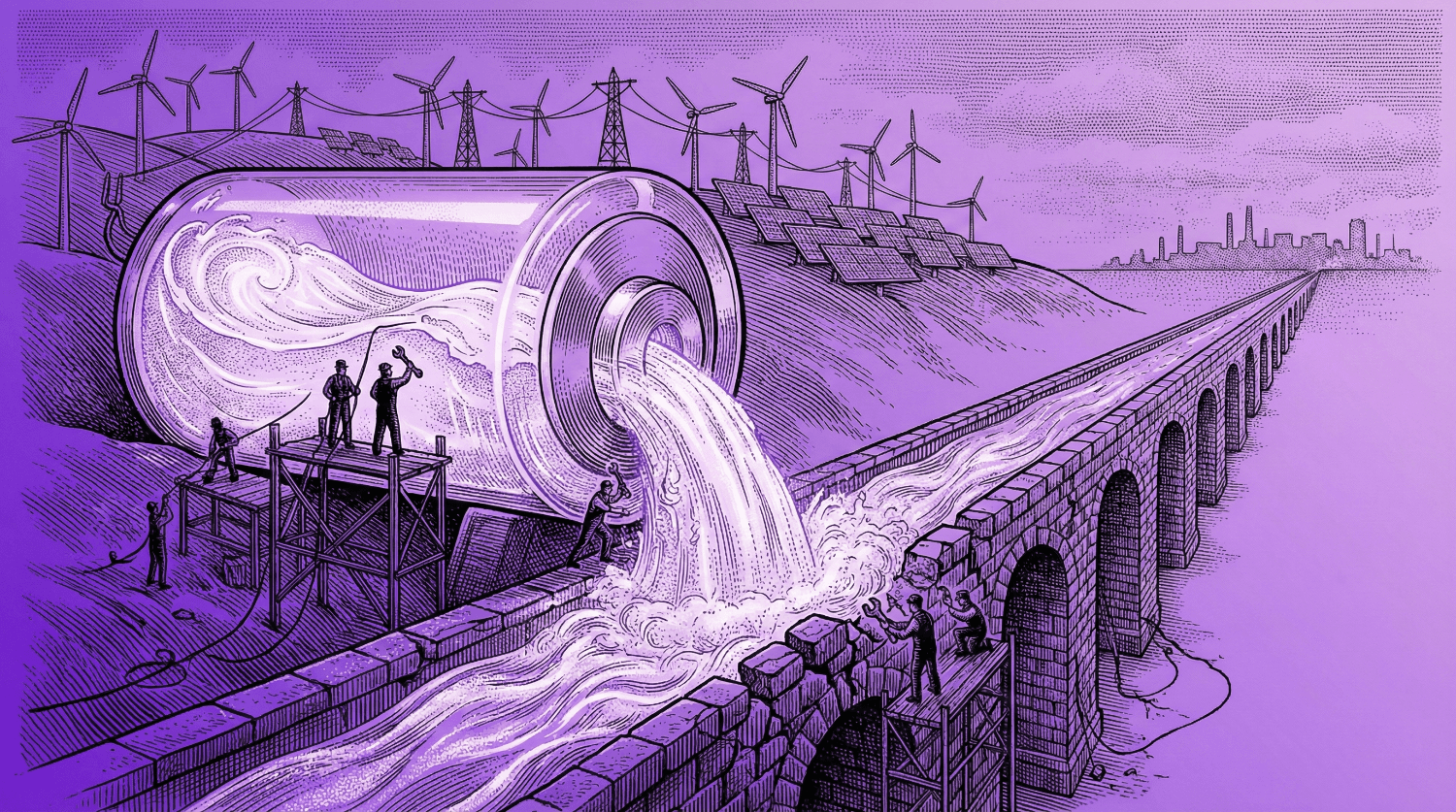
In the Netherlands, research warns that grid congestion could cost the Dutch economy up to €40 billion annually through blocked expansions and cancelled renewable projects. The grid, in other words, is not merely a cost centre. It is becoming the binding constraint on the entire transition.
When Electricity Eats Its Own Value
Economists have a clinical term for what happens when solar and wind flood the market at the same time: cannibalisation. It means that the more renewable capacity you add, the less each additional megawatt-hour is worth at the moment it is produced, because all the turbines and panels are generating simultaneously.
During hours of scarcity (cold, windless evenings in January) the price is set by gas. And in 2025, the average cost of electricity from gas generation in the EU ranged between €101 and €112 per megawatt-hour. During those peak gas-use hours, wholesale prices ran 11 percent higher across the EU than in 2024.
The result is a market that oscillates between two extremes: worthless at noon, expensive at dusk. Average wholesale prices in 2025 settled around €88 per megawatt-hour, lower than 2023, slightly above 2024. But averages obscure the violence of the swing. The system is not stabilising. It is bifurcating.
The Nordics offer a partial counter-example. With deep hydroelectric reserves acting as natural storage, Nordic prices fell by more than 20 percent to roughly $40 per megawatt-hour, less than half the German average. The lesson is instructive: when you have flexible backup, renewables do suppress prices. When you don't, they produce cheap power that the system cannot absorb.
Teaching Consumption to Chase the Weather
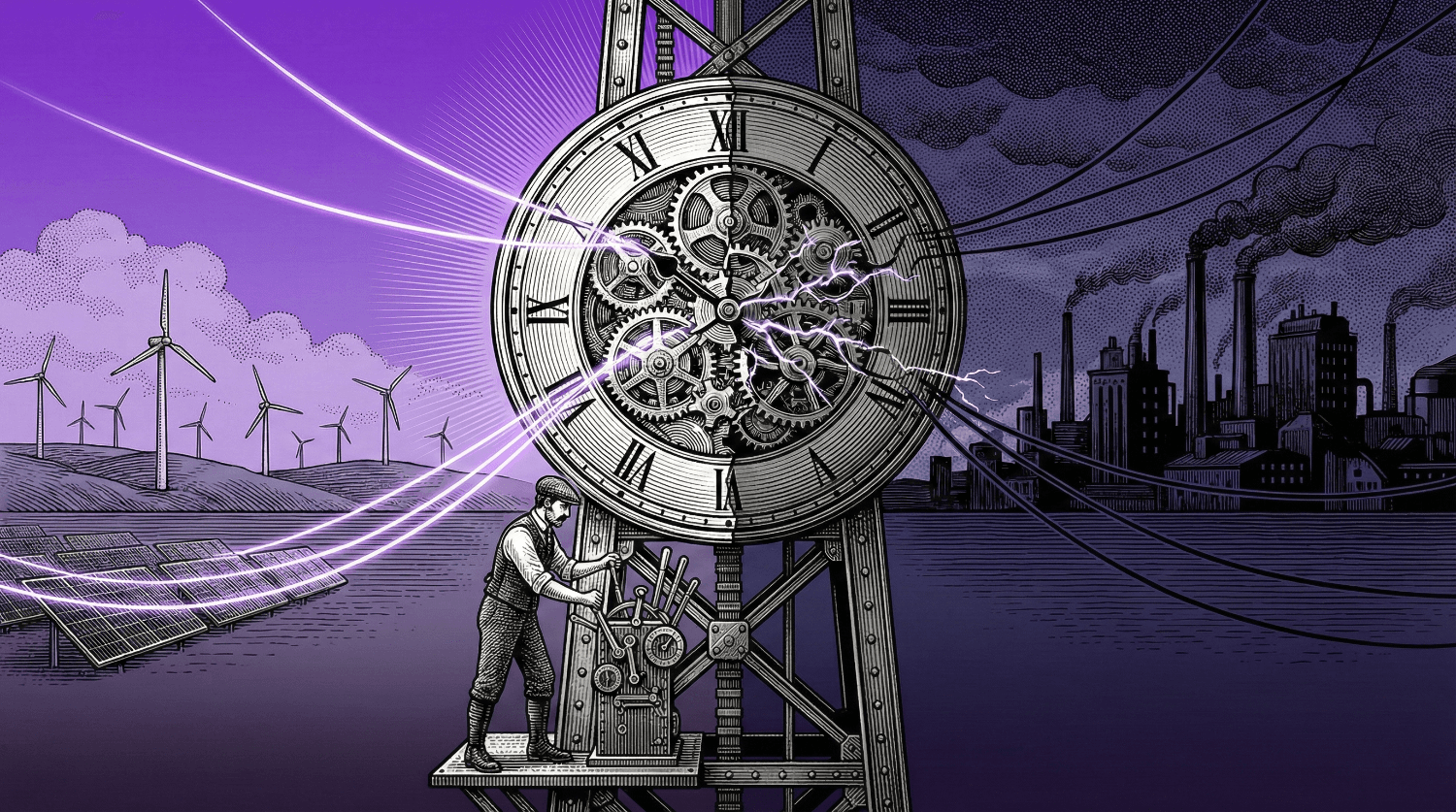
For most of the electrical age, supply followed demand. Power plants ramped up when people flipped switches. The genius of the renewable transition, and its central operational problem, is that it inverts this logic. Supply now follows weather. The question is whether demand can learn to follow supply.
The technical term is demand-side flexibility. The practical version is simpler: can millions of heat pumps, electric vehicle chargers, water heaters, and industrial processes shift their consumption by minutes or hours to match the rhythm of the wind and sun?
The economics say yes, emphatically. ENTSO-E, the body that coordinates Europe's transmission system operators, estimates that tapping into flexibility potential could save up to €5 billion annually in avoided generation costs alone. By flattening peak demand, flexibility reduces the need for expensive gas-fired peaker plants. By absorbing surplus renewables during negative-price hours, it arrests cannibalisation.
The infrastructure savings are even larger. Upgrading Europe's distribution and transmission grids is estimated to cost €730 billion and €477 billion respectively by 2040. Every megawatt-hour of demand that can be shifted in time rather than transported in space represents avoided steel, copper, and concrete. SolarPower Europe estimates that flexible solutions could lower electricity prices by up to 25 percent by 2030.
The raw material for this shift already exists. The number of connected residential prosumers in Europe (households with solar panels, batteries, or smart appliances that can both consume and export energy) nearly tripled between 2021 and 2024, reaching almost seven million. If aggregated and coordinated, these devices constitute a virtual power plant larger than most countries' peaking capacity. But aggregation requires orchestration, and orchestration requires software.
Three Markets That Already Work
The orchestration layer is called a Distributed Energy Resource Management System, a DERMs platform. It is the software that sits between millions of individual devices and the grid operators who need them to behave as a single, dispatch-able resource. By 2025, several European projects have moved this from theory to operational reality.
The Netherlands: GOPACS. The Dutch grid congestion platform operates as a market-based solution to transmission bottlenecks. In November 2024, GOPACS processed around 200 orders over two days, enabling 2 gigawatt-hours of redispatch at an average cost of €500 per megawatt-hour. The economics are brutal (€500 is expensive) but the alternative is curtailment or, worse, blocked connections for new renewable projects.
The United Kingdom: Project BiTraDER. This flexibility market tackles a specific problem: non-firm grid connections, where generators accept that they may be curtailed when the grid is constrained. BiTraDER allows participants to trade their curtailment obligations with each other, ensuring that the lowest-cost green energy gets dispatched first. It turns a blunt administrative tool ("you're cut off") into a market signal.
Cross-border: BeFLEXIBLE. Spanning Spain, Italy, Portugal, Belgium, Germany, Sweden, and Denmark, this project aims to improve cooperation between distribution and transmission system operators. Its core innovation is a common data space that lets flexibility assets be visible and dispatchable across national boundaries, a prerequisite for a genuinely integrated European flexibility market.
These are not pilot projects in the polite sense of experiments that produce reports. They are operational markets processing real megawatt-hours at real prices.
Brussels Writes the Rules
The regulatory architecture is catching up. The single most significant development is ACER's proposal for a new EU-wide Network Code on Demand Response, submitted to the European Commission in March 2025. Its objective is to establish harmonised rules that allow consumers, storage providers, and distributed generation to participate directly in wholesale electricity markets, not as exceptions or pilot participants, but as standard market actors.
Implementation is expected from 2027. It is, in effect, the operating license for the DERMs industry at European scale.
In parallel, ACER approved a common EU methodology for assessing non-fossil flexibility needs in July 2025. Member states must complete national flexibility assessments by July 2026, with indicative flexibility targets set by January 2027. For the first time, flexibility has a statutory definition, a measurement methodology, and a deadline.
What Has to Happen Next
The regulatory intent is clear. The technology is proven. The gap is execution, and it concentrates in four areas.
Measurement comes first. You cannot flex what you cannot measure. Smart meter rollout remains uneven across Europe, and the meters themselves are only part of the story. Dedicated measurement devices linked to specific appliances (EV chargers, heat pumps, battery systems) are faster to deploy and more granular than whole-house metering.
Pricing must tell the truth. The retail disconnect persists largely because flat-rate pricing insulates consumers from the time-value of electricity. Dynamic pricing, where the retail rate tracks wholesale fluctuations, turns every household into a potential flexibility participant. Norway already has 93 percent of residential supply contracts on dynamic terms. Denmark sits at 69 percent. Finland at 30 percent. Much of continental Europe is in single digits.
Flexibility needs its own industrial identity. As argued by smartEn, the Flexible Demand Management Industry must be formally recognised as a distinct clean technology sector under frameworks like the EU Net-Zero Industry Act. Without this recognition, flexibility companies compete for capital, talent, and policy attention against sectors with established lobbying infrastructures.
Industry must be empowered to bend. The competitiveness crisis is sharpest at the industrial level. Linking industrial power purchase agreements to flexible, time-based clean energy use, rather than fixed-volume contracts, would allow factories to capture the value of shifting their load. State-industry energy deals should include flexibility providers as active participants, not afterthoughts.
The Gap That Software Must Close
The transition is, in the end, a software problem wearing an infrastructure costume. The poles and wires matter, but the decisive variable is whether the intelligence layer arrives in time to make use of what has already been built.
"For years, the conversation was about whether EVs and distributed devices would destabilize the grid," says Peter Hofierka, co-founder of Wattiva, a DERMS platform aggregating distributed energy resources into dispatchable virtual power plants. "We are now demonstrating that they can be the solution."
Europe has, without quite intending to, constructed the raw material for a flexible, software-coordinated grid: seven million connected prosumers, a regulatory framework finally pointed in the right direction, and wholesale prices volatile enough to make flexibility worth chasing. What it has not yet built is the orchestration layer that turns those assets into a system.
That gap will not be closed by more turbines or more copper. It will be closed by software that knows, in real time, where the power is, where the demand is, and how to move one toward the other.