Megawatts of Wasted Energy Across Poland
Poland's five largest grid operators gathered in Warsaw and described a paradox at the heart of the energy transition: millions of home batteries that are installed and fully charged but not being used. The solution they outlined requires no new infrastructure. It only requires software and the distributed assets already in your home.
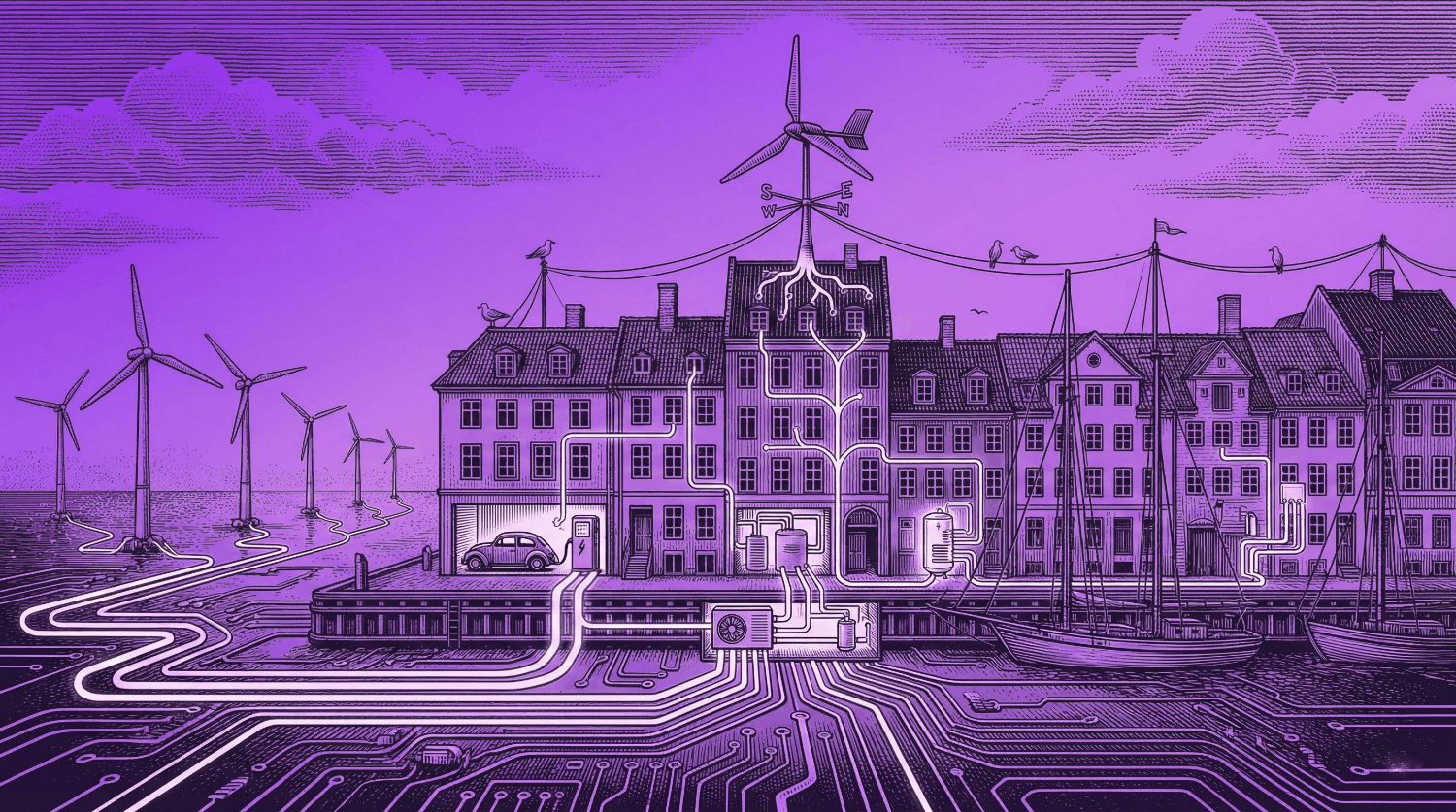
Europe is wiring itself for a future that its grid cannot yet use. On one side of the equation are hundreds of billions in planned distribution investments, a required capacity expansion of 50% to 70% by 2030, and an industry scrambling to permit and build. On the other hand, In Poland alone, 700 MW of home batteries are fully charged by breakfast and then left unused. The gap between those two realities has a name. It is called the flexibility problem.
Something interesting happened at EuroPOWER 2026 in Warsaw. Five executives who run electricity networks serving nearly 40 million people in Poland sat on a panel together and said that the energy transition has created an unexpected problem. Their solution wasn't to build more infrastructure. Rather, they said the solution lies in software, contracts, and the distributed assets already in their customers' homes.
The panel was called "From Connections to Flexibility." What followed was a discussion about some of the most concrete, data-driven ideas about Europe's distributed energy challenge that you're likely to hear from people who operate the grid.
Megawatts of storage installed and charged but useless.
Maciej Mróz, the CEO of Tauron and chair of Poland's grid operator association PTPiREE, opened with a number that reframes the entire grid conversation.
"Over 700 MW of storage is already installed in low-voltage networks. The problem is that they are not controlled. By 9 AM they're fully charged and provide zero support for the system."
Seven hundred megawatts is roughly the output of a midsized gas power plant. These megawatts are located in garages and utility rooms across southern Poland, fully charged, contributing nothing useful to anyone. And Mróz didn't stop there. He raised a scenario that should concentrate the minds of every European grid operator:
"What if, in a year, we have 10 GW of prosumer storage that is neither steerable nor controllable?"
Ten gigawatts of unmanaged distributed storage is not a theoretical future. Germany, Spain, and Italy are already heading there. The hardware is arriving faster than the software to orchestrate it. Mróz was describing a grid stability risk hiding inside what looks like an energy success story. The problem isn't that Poland installed too much storage. The problem is that nobody is driving it.
A single contract recently provided 840 MW of grid services with no construction required.
The most quietly stunning data point of the panel came from Marek Szymankiewicz, the CEO of Enea Operator, covering north-central Poland.
"We signed our first system services contract last week for voltage regulation. The investor gives us full control of reactive power regulation from their OZE installation. That resource alone is 840 MW on our network. A typical reactor costs 37 MW, so I don't need to invest. I can use this potential."
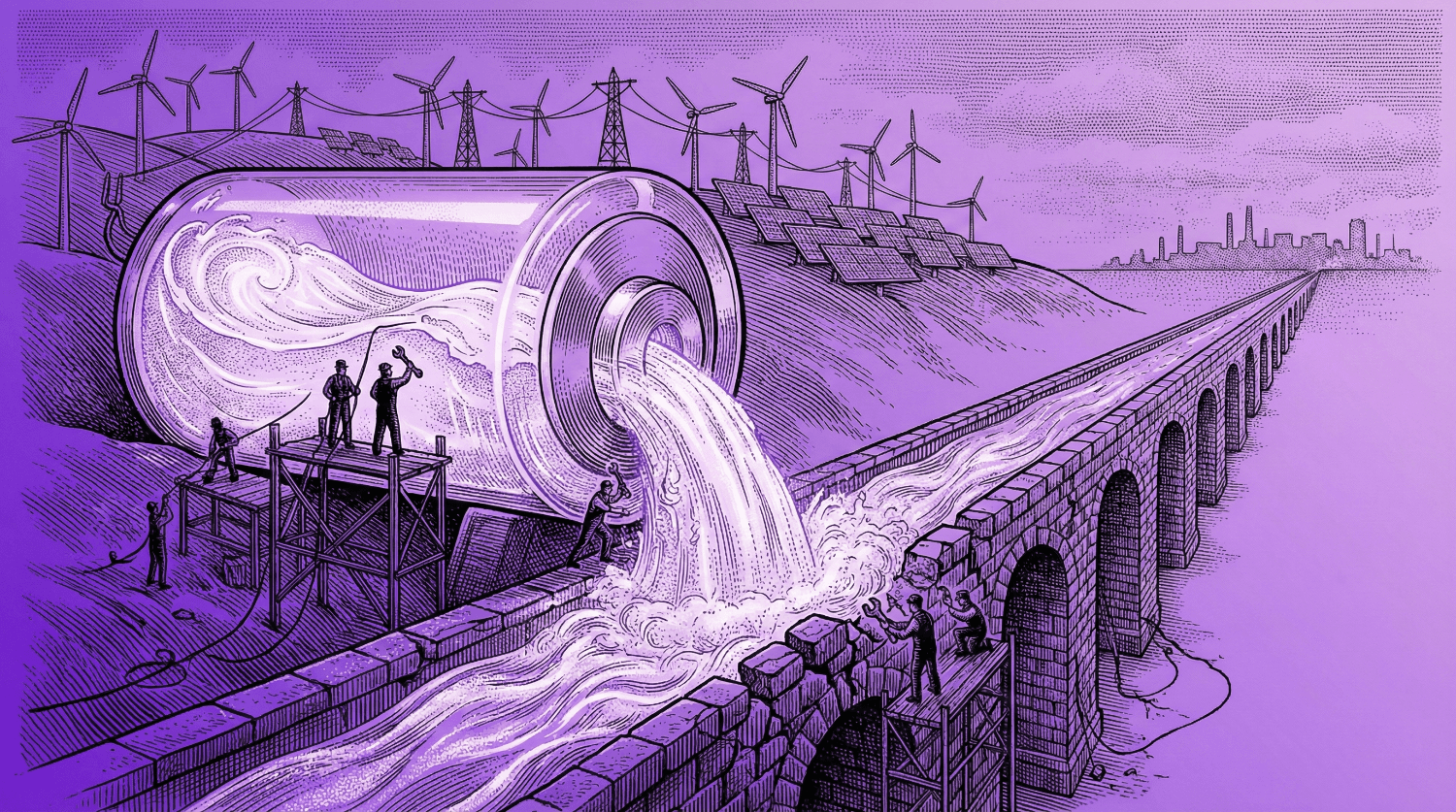
There is no permitting queue, no capital expenditure, and no construction timeline. Building conventional reactors to provide the same service would cost tens of millions of euros and take years. Szymankiewicz secured the equivalent of more than twenty of them by signing a contract. The EU Commission estimates that leveraging this type of flexibility could save up to €5 billion per year in distribution-level grid investments across Europe. Enea just demonstrated what that arithmetic looks like in practice.
Szymankiewicz also set the technical standard that any serious aggregator must meet. Smooth, graduated dispatch is not optional. "Storage must have ramping," he said. "We need to know the gradation at which the storage will inject power. Sudden spikes, surges, pluses, and minuses won't work. That won't build system stability." Binary on/off control doesn't meet the standard. Continuous, granular control does.”
The commercial will is there. The rulebook hasn't caught up yet.
Robert Świerzyński, the CEO of Energa Operator, was the most straightforward about the commercial gap. The flexibility that his network requires is not hypothetical. It can be found in various locations, including homes, parking lots, and local businesses within the areas serviced by Energa. What's missing is the legal and commercial framework to access it.
"I would do a lot to get those customers to come to us. In tariff terms this means discounts. I'd love to, but today regulations don't allow me to work with local governments on this. I want business models that activate groups that can help us."
He identified prosumers, energy communities, and municipalities as the three groups that urgently need to be incorporated into the system. The EU's forthcoming Network Code on Demand Response, submitted by ACER to the European Commission in March 2025 and expected to be enforced nationally by 2027, is designed to address this issue. It establishes harmonized rules so that all distributed energy resources, whether aggregated or not, can fully participate in electricity markets. The regulatory door is opening. The question is who will walk through it first.
Additionally, Świerzyński pointed out the geographical issue underlying Poland's curtailment numbers. The country's renewable energy development has concentrated in the south. Consumption centers are located elsewhere. His solution was clear: "We must change the paradigm. This transformation is for all market participants. We need to change the geometry of business development in Poland." Locational price signals and zonal pricing models, which are already operating in Spain and Germany, are the mechanisms that make this rebalancing legible to investors. ENTSO-E recently recommended splitting the Germany-Luxembourg bidding zone into five separate price zones, estimating net benefits of €339 million from reduced internal congestion. That's the model Świerżyński was calling for Poland to study.
The EV bus sitting in a depot overnight is already a battery. Nobody is treating it that way.
Wojciech Graczyk, the CEO of Stoen Operator in central Warsaw, identified the combination that makes urban grid flexibility possible: EV charging paired with co-located storage.
"Electric buses charge at night. To make this flexible, it should be paired with a battery storage system that charges during the day. Combining our charging connection with storage and using it when needed at night would significantly improve network operation."
The logic is elegant. A bus depot is a predictable, large, grid-connected load with a known schedule. A battery placed alongside the depot can absorb solar generation during the day, charge the buses at night, and discharge to the grid during morning peak hours, when Mróz's prosumer batteries are full and idle. According to Eurelectric and EY, deploying EV smart charging and vehicle-to-grid technology on a large scale could reduce the required annual European grid investment from €67 billion to €55 billion by 2050. By 2040, EVs could store and reinject more than 10% of Europe's total power needs. Graczyk illustrated the entire logic of the distributed energy transition in one bus depot.
The next grid upgrade is a hardware, not a cable.
The five CEOs all reached the same conclusion from different angles. Europe faces €375 to €425 billion in distribution grid investments through 2030, a 50% to 70% increase from the previous decade. However, the fastest and cheapest path to increasing capacity may not involve construction at all. Mróz posed the question directly: "You have to ask yourself: is it worth building more infrastructure, or is it better to purchase a flexibility service?"
Eurelectric's November 2025 Distributed Flexibility Report identifies four tools that DSOs can use immediately: rules-based requirements, network tariffs, flexible connection agreements, and market-based procurement. The conclusion is unambiguous. No single approach is sufficient; national regulation must allow DSOs to use all four tools in combination. The Warsaw panel suggests that Polish operators are ahead of the curve, contracting flexibility before the formal framework is fully in place.
The hardware wave has already broken over European low-voltage networks. Prosumer batteries, EV chargers, heat pumps, and solar inverters are now permanent features of the distribution grid. Operators aren't asking whether distributed assets can provide flexibility. Rather, they are asking whether anyone can aggregate and control these assets with the precision and graduations Szymankiewicz described and deliver that service at the speed the grid actually needs.
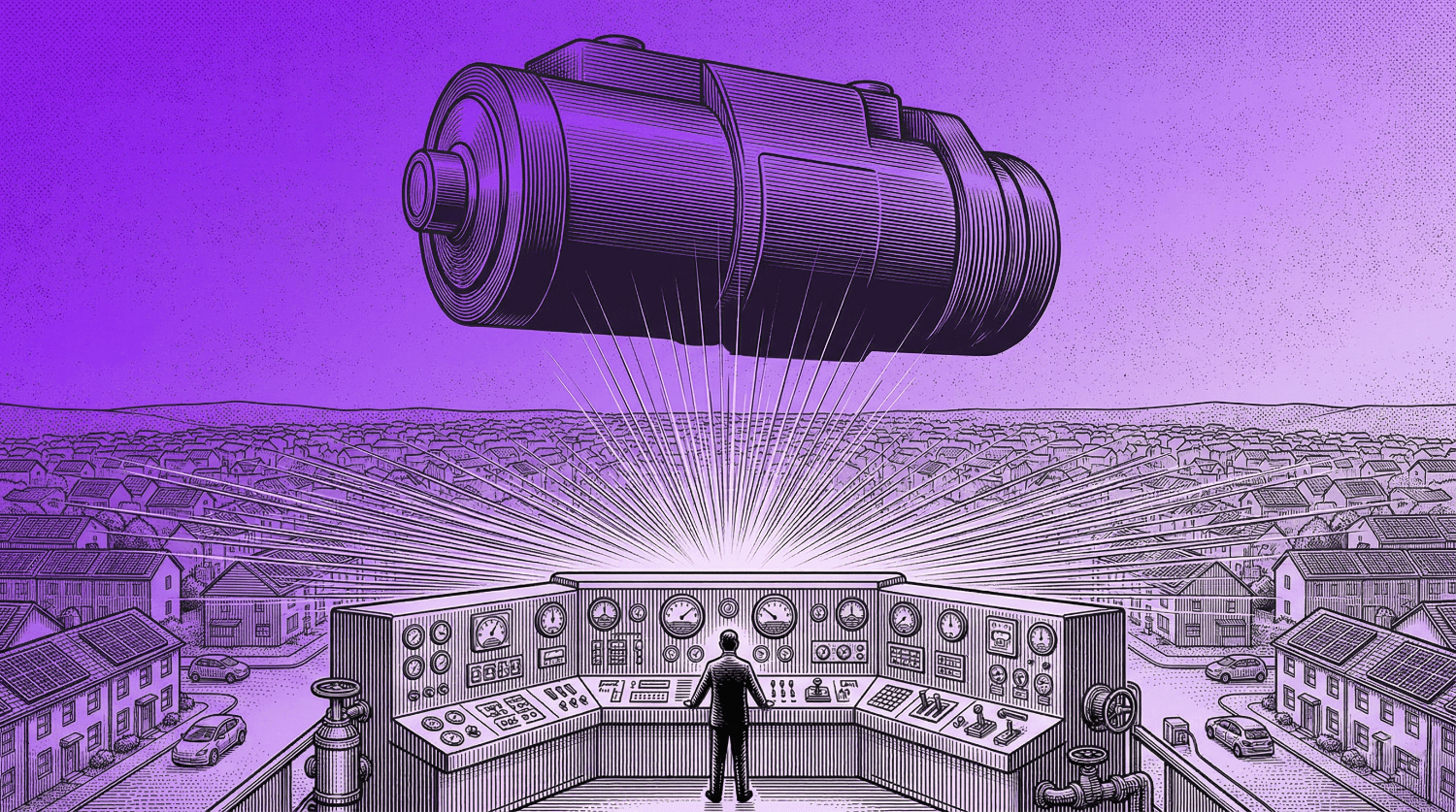
The industry needs someone to manage the grid.
This is where Wattiva enters the story.
Wattiva is a DERMS and Virtual Power Plant (VPP) software platform designed for energy companies looking to transform their customers' distributed energy resources (DER) into controllable, monetizable assets. The platform aggregates EVs, home batteries, heat pumps, and solar inverters. It connects to devices through existing cloud interfaces, so no additional hardware is required. Wattiva gives DSOs and energy retailers real-time visibility and smooth, graduated dispatch over thousands of assets simultaneously.
The graduated ramping that Szymankiewicz identified as a technical requirement for serious grid services? It's not a feature that Wattiva added as an afterthought. It's the design principle the platform was built around from day one. The business models that activate prosumers and municipalities that Świerzyński said he can't reach through existing regulations? Wattiva makes those groups visible, addressable, and commercially viable for energy companies that have existing relationships with them.
The European market is proving this model at scale. VPP platforms connecting residential solar, batteries, EVs, and heat pumps into multiple gigawatts of aggregated capacity are already operating commercially across Germany, France, and the Netherlands. The Warsaw panel confirmed that Polish DSOs are ready to be customers of this type of service and that the regulatory framework to enable it is on schedule. Wattiva is built to meet that moment.
The message from the five grid operators in Warsaw was clear. The distributed assets exist. The commercial will is there. The regulatory path is opening. The only thing standing between 700 MW of idle prosumer batteries and a stable, flexible grid is the software that will connect, control, and monetize them.
The next chapter of the energy transition won't be written by building more wires. It will be written by using what's already connected.
Your customers own the flexibility. We help you monetize it.